This iced hojicha latte is the perfect drink when you’re craving something creamy and toasty. It’s great at any time of the day due to its low caffeine content and can easily be made in the comfort of your own home.

What is hojicha?
Hojicha is a type of roasted Japanese green tea. In the roasting process, the green tea leaves deepen in color and create a toasty flavor. It also has an earthy flavor similar to matcha, though it contains less caffeine. Along with this, it has a bit of a sweet taste, likely due to the roasting process.
Where to buy
You can purchase hojicha tea bags, hojicha loose leaf tea or hojicha in the powder form. For this recipe, I used the powdered form of hojicha, but I also enjoy a cup of hot hojicha tea from a tea bag quite often.
Hojicha can be purchased at your local Asian grocery store or online. Here are a few of my favorite options that I have tried in the past.
Ingredients for Hojicha Latte
Before you make this hojicha latte recipe, make sure you have all the ingredients you need. All of the ingredients are listed below next to potential alternatives. For the best results, stick to the original ingredients.
| Ingredients | Substitutions |
| Hojicha powder | Brewed hojicha tea, matcha powder |
| 2% cow’s milk | Whole milk, skim milk, non-dairy milk (oat milk, almond milk, soy milk) |
| Agave nectar | White sugar, brown sugar, honey, maple syrup, stevia |
How to make Hojicha Latte
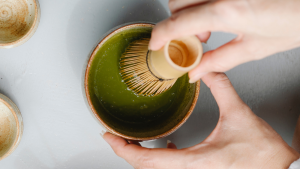
In a medium sized bowl, add the hojicha powder. For the best results, sift the powder to avoid clumps. Add about 2-4 tablespoons of hot water and use a bamboo whisk (preferred method) or a headheld frother to combine the powder with the water.
Fill a mason jar, glass or mug about halfway full with ice cubes. Pour in the cold milk and agave nectar. Use a spoon or straw to stir together.
Slowly pour the hojicha over the milk. Then, use a spoon or straw to mix together. The end result should be a nice light grey-brown color.

Matcha vs. Hojicha
The main difference between matcha and hojicha is that hojicha is made with roasted green tea and matcha is made with non-roasted green tea.
Because of this, hojicha is brown in color while matcha is bright green. Hojicha has a roasted, toasty flavor, while matcha has a more earthy flavor.
Along with this, it’s important to note that matcha is always in a superfine powdered form. Hojicha can be made by brewing tea leaves or by mixing powdered tea leaves with hot water.
Both are Japanese teas and can be in the form of Japanese green tea powder. A matcha latte is almost as delicious as a hojicha latte (in my opinion) and matcha powder can be used in baking just like hojicha powder.
Is hojicha high in caffeine?
Great question! The answer is no. While the amount of caffeine in hojicha depends on the brand, serving size and strength of your tea, generally it is lower in caffeine compared to other forms of green tea, especially matcha.
Typically, a cup of hojicha contains less than 10 milligrams of caffeine. As a comparison, a cup of coffee contains almost 100 milligrams of caffeine. Therefore, you would need to consume more than ten cups of hojicha to get as much caffeine as coffee.
If you want a higher caffeine version of green tea, try matcha. One cup of matcha contains around 70 milligrams of caffeine, almost as much as a cup of coffee. Unfortunately, matcha can be expensive, so I’d recommend starting off with culinary grade matcha.
Is hojicha as healthy as green tea?
Due to the roasting process, hojicha does contain less antioxidants than traditional green tea. But don’t worry! The differences are pretty minimal and even if you do choose hojicha over regular green tea, you’ll still get the benefits.
Personally, I like blending my regular green tea (sencha) with hojicha when I make a pot of tea in the morning. This way, I get the extra caffeine and antioxidants from the green tea along with the taste of hojicha (which I prefer).

Iced Hojicha Latte (Roasted Green Tea)
Ingredients
- 1 tsp hojicha powder
- 1 cup 2% cow's milk
- 2 tsp agave nectar
Instructions
- In a medium sized bowl, add the hojicha powder. For the best results, sift the powder to avoid clumps.
- Add about 2-4 tablespoons of hot water and use a bamboo whisk (preferred method) or a headheld frother to combine the powder with the water.
- Fill a mason jar, glass or mug about halfway full with ice cubes. Pour in the cold milk and agave nectar. Use a spoon or straw to stir together.
- Slowly pour the hojicha over the milk. Then, use a spoon or straw to mix together. The end result should be a nice light grey-brown color.